AI × production
AI Built Your MVP. Who Ships the Real Thing?
AI can produce a working prototype in a weekend. Taking it to real users — auth, data, load, compliance, uptime — is a different job. Here's the gap, and what it costs to close.
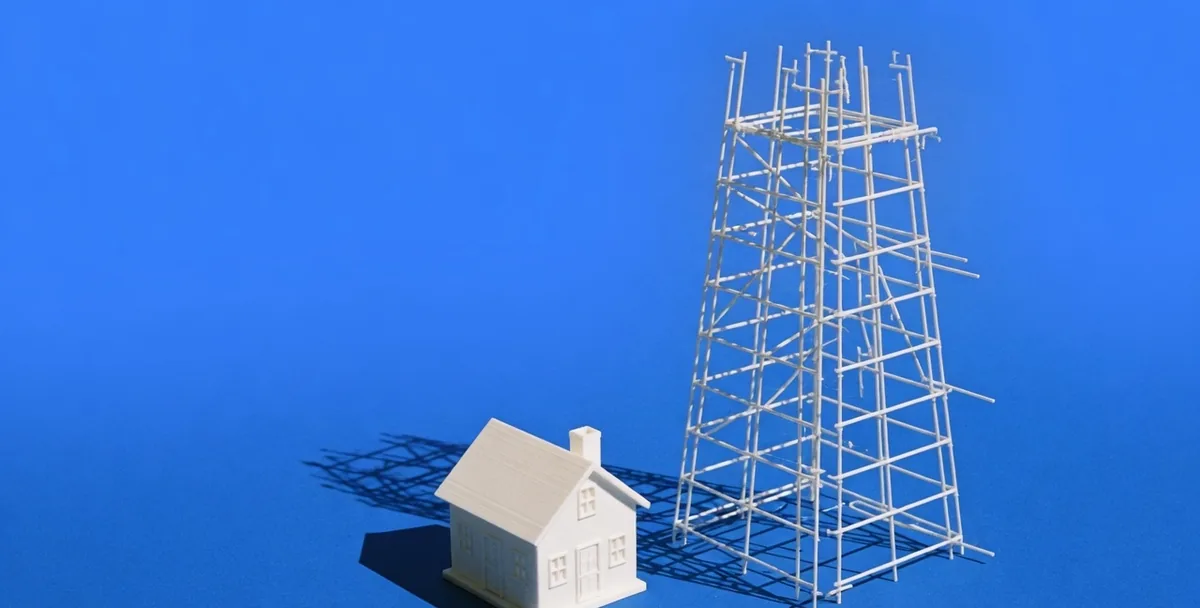
Something genuinely changed in the last two years. A founder with no engineer can describe a product to Claude or ChatGPT, and by Sunday night there is a thing on the screen that logs in, saves data and looks like a product. That is not a toy. It is the fastest way to find out whether an idea is worth anything.
Then the first ten real users arrive, and the questions change.
What the prototype quietly skipped
AI-generated apps are optimised to demo. The parts users never see are the parts that get skipped, because nobody asked for them in the prompt:
- Auth that survives contact — password reset, session expiry, one account across two devices, someone who signs up twice with the same email.
- Data you can trust — no migrations, no constraints, no backups. The first schema change loses data.
- Money — a payment that succeeds at the gateway and fails in your database. Refunds. Reconciliation at month end.
- Load — a query with no index is instant at 50 rows and unusable at 50,000.
- Compliance — GST invoices, an audit trail, who saw whose data, where the data physically sits.
- Operations — when it breaks at 11pm, does anyone know? Is there a way back to yesterday's state?
The honest choice at this point
| Where you are | What usually happens | What it costs |
|---|---|---|
| Prototype validates, few users | Keep patching it yourself | Free, until it isn't |
| First paying customers | Hire a junior to “clean it up” | Slow; they inherit decisions nobody can explain |
| Real usage, real money | Rebuild the core, keep the product decisions | Weeks, not months — the thinking is already done |
Why the rebuild is smaller than you fear
The expensive part of software was never the typing. It was deciding what the thing does. Your prototype already answers that — screen by screen, in a form nobody can argue with. That makes an engineer's job much smaller: keep every product decision, replace the parts that only had to survive a demo.
That is most of what we get asked for now. Someone arrives with a working AI-built prototype and a waiting list, and wants the version that can take money on a Tuesday without anyone watching it.
What we do with a prototype
- Read it, run it, and write down what it actually does — not what it was meant to do.
- Keep the interface your users already reacted to. Rewrite what sits under it.
- Real database with migrations, real auth, payments that reconcile, error tracking, backups.
- Deploy it somewhere you own, with your repo, from day one.
Fixed price, written scope, and a first working demo in 14 days. If your prototype is close enough to keep, we will say so — that is a cheaper answer for you and a faster one for us.
Questions
Can you take over an app built with Claude, Lovable or Cursor?
Yes — that is now a normal starting point. We read the prototype, keep the product decisions it encodes, and rebuild the parts that were never meant to carry real users: auth, data, payments, monitoring.
Do I have to throw away everything the AI wrote?
Usually not. Interfaces and flows survive; the data layer and anything touching money or identity is where rewriting pays. We tell you which is which after reading it, before you commit.
How much does it cost to take an AI prototype to production?
It depends on how much of it holds up. Builds start at $499 and are quoted fixed-price after a 30-minute read of your code — no hourly meter.